
09/28/2026
Jewish Community Not Immune to Financial Vulnerability

The cover of the 2022 Cleveland Jewish Population Study, which was publicly released in August 2025. View and download the report at cjn.org. Screenshot
Article reprinted with permission from Cleveland Jewish News
by Casey Swinarski
In a community that is often thriving on the surface, the statistic that revealed that 20% of Jewish households are financially vulnerable was a surprise to many.
According to the Jewish Federation of Cleveland’s 2022 Population Study, one in five Jewish households in Cleveland was either just getting by or unable to make ends meet. This includes households living at or below 250% of the federal poverty line, as well as families strained by childcare costs, college tuition or caring for aging relatives. The study was publicly released in August 2025.

Halvorson
Melanie Halvorson, vice president of community planning and allocations at the Jewish Federation of Cleveland, told the Cleveland Jewish News that while fewer households reported financial strain in 2022 than in the last study in 2011, pandemic-era support – such as expanded SNAP benefits, rental assistance, the student loan payment pause, and the expanded Child Tax Credit – were still in effect when the study was conducted, leaving some households stable on paper, but vulnerable beneath the surface.
“We think these statistics could be worse now,” she said.
Jason Wuliger, chair of the Jewish Federation of Cleveland’s government relations committee and board member for the Jewish Federations of North America, was one of many who were surprised to see that number.
“What we learned from the Cleveland Jewish Community Study is that more people in the Jewish community are struggling financially than many realized,” Wuliger told the CJN. “When things like Social Security or food aid are reduced, people have really tough choices to make.”

Kwait
Having to choose between groceries, bills or medical expenses is a very real situation for some in the community, and the population study found that young adults and families with children are most affected.
Forty-two percent of those ages 18 to 34 are in the struggling category, higher than any other age group. This group includes recent graduates navigating a challenging job market, newlyweds priced out of homeownership, and new parents facing high childcare costs.
Additionally, 28% of households with children reported that they were financially struggling – 10-points higher than households without children. Older adults, Wuliger said, can also be vulnerable, but can fly under the radar.
“The impact is particularly difficult on older adults because they’re often living on fixed incomes and people with disabilities who rely on community support and public health benefits to stay independent,” Wuliger said. “It’s really important for those folks to not just have financial security, but also to be able to maintain their health and dignity and to remain connected to the community.”
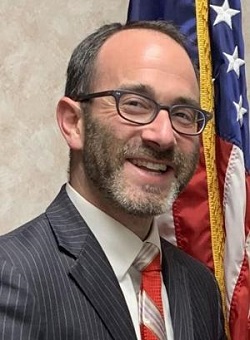
Wuliger
Organizations such as the Jewish Family Service Association of Cleveland, Cleveland Chesed Center, Bellefaire JCB, Gesher Cleveland, Cleveland Kosher Food Pantry and Access Jewish Cleveland – to name a few – all offer resources, programs and scholarships to those in financial need at a variety of different levels.
“All of these agencies and resources help to keep our community connected with charitable organizations that can help them navigate what can be a really difficult process to access government benefits for people who are eligible,” Wuliger said.
While the Federation helps support immediate needs in the community through its assistance programs, Halvorson said that its role goes far beyond just funding those services.
“We also help identify emerging needs and bring community partners together to look at where there may be gaps in the system,” Halvorson said. “Even with a system as strong as ours, there are always going to be emerging gaps, and a big part of our work is making sure that we’re not just responding to immediate needs, but also thinking about how to strengthen the community support network longterm.”
The Financial Distress Roundtable, which was formed after the 2011 population study was completed, brings community organizations together in an opportunity to share, exchange information on the needs that they are seeing in their respective areas, and learn from one another in a collaborative effort to help the community.
Resources such as the Mandel Middle Income Program and the Mandel Myers Fellowship Program, both through JFSA, can also help alleviate financial burdens and debt.
Even with these programs in place, Wuliger stressed that the Jewish community “can not replace” government support and assistance, so it’s important that community members make their voices heard and stay informed.
“Our elected officials do respond to what they hear from constituents, so reach out to your elected officials and let them know what issues you care about,” Wuliger said. “Make sure they understand that taking care of people in need is not just the right thing to do, but a large priority for us as individuals and as a community.”
For those who may not need government assistance but are still struggling to get by, financial strain can place limited participation in Jewish life and community activities.
According to the study, about one-quarter of Cleveland households said financial cost prevented them from participating in Jewish life in the past five years. That includes things like a trip to Israel, synagogue membership, celebrating holidays or attending programs, or choosing Sunday school or Jewish preschool for their children.
Among households that were struggling financially, that 27% figure more than doubled, and among families with children, 41% reported financial cost as a limit to participation.
Mandy Kwait, a licensed social worker and the senior director of community care at Bellefaire JCB, told the Cleveland Jewish News that part of the organization’s work includes placing clinicians in many of the local Jewish day schools, where they can identify and work with children whose families are facing financial stress and may be at risk.
“Children may experience financial stress through changes in their emotions or their behavior, even if they don’t identify finances as the source of their stress,” Kwait told the CJN. “A lot of times, financial stress affects the whole family, so parents may be worried or overwhelmed and children can pick up on that stress, which can possibly show up as anxiety, irritability, behavior changes or difficulty concentrating.”
While financial vulnerability does not directly cause mental health concerns in all individuals who experience it, Kwait emphasized the importance of being aware of the signs that may point to someone who is struggling.
“In our community, financial hardship isn’t always obvious,” Kwait said. “Families working and providing for their children can still be experiencing significant financial pressure, but we might see the effects of stress rather than the financial problem itself. Something like the population study is really eye-opening for us because a lot of families were identified as just getting by or struggling that we otherwise might not have been aware of.”
According to the study, 9% of Jewish households cannot cover an unexpected $400 emergency expense, and another 5% would struggle to cover a $1,000 emergency.
As Wuliger put it, “One of the biggest things we can do for each other is to make sure that when people are struggling, there is no stigma attached.”
“It is very common in people’s lives at one point or another to have a setback or a struggle that you weren’t anticipating, and there’s no shame in that,” he said. “In fact, it’s why the system exists.”
Those in need of assistance should visit accessjewishcleveland.org to connect with resources.
To stay up to date with the latest in government, sign up for action alerts at votervoice.net/OhioJewishComm/Register.
