
07/03/2026
Northeast Ohio's Rich Jewish History Has Influenced USA

Image by PublicDomainPictures from Pixabay
Article reprinted with permission from Cleveland Jewish News
by Casey Couch
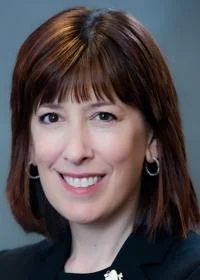
Rudin-Luria
On the eve of America’s 250th birthday, “We the people” prepare to flood America’s suburban neighborhoods, from the mountains to the prairies, with firecrackers, star-spangled swimsuits and the smell of a good, old-fashioned American barbeque. A nation’s semiquincentennial anniversary, after all, must not pass by without a fireworks display.
But beneath the red, white and blue fanfare is a melting-pot nation that is rooted in history, and president of the Jewish Federation of Cleveland in Beachwood, Erika B. Rudin-Luria, reflected that the Cleveland Jewish community has certainly held a pen in the writing of that narrative.
“As America celebrates its 250th anniversary, we take pride in the many ways Jewish Americans – and Jewish Clevelanders in particular – have helped influence our nation for generations,” Rudin-Luria told the Cleveland Jewish News. “Through leadership, philanthropy and service, our community has consistently demonstrated the value of democracy and the importance of meaningful civic participation. Jewish Cleveland is proud to be home to an exceptional number of leaders who have gone on to shape national and international organizations, reflecting our commitment to strengthening both Jewish life and society as a whole. As we mark this milestone, we are reminded of President George Washington’s promise that America would give ‘to bigotry no sanction, to persecution no assistance,’ a vision that continues to inspire us today.”
When the Declaration of Independence was signed on July 4, 1776, the state of Ohio was a British territory, not yet ceded to the new nation. In 1803, Ohio was admitted as the 17th state of the United States.

Marin
According to Sean Martin, curator for Jewish history at the Western Reserve Historical Society in Cleveland, the first documented Jew in Cleveland came from a newspaper advertisement in 1836 – 33 years after the state was admitted – under the name Philip J. Joachimssen, and in 1837, Simson Thorman, a Bavarian Jew from Unsleben, arrived in Cleveland as the first documented Jewish settler. Thorman, Martin said, ultimately stayed in Cleveland, bringing over his friends and family from Unsleben.
“The first Jewish immigrants to the area are coming from, essentially, German-speaking lands,” Martin told the CJN. “They’re coming from Bavaria and other German principalities and states at that time, and they’re coming in the 1840s and 1850s. By the 1860s, we had Jews that were coming from Poland and Hungary.”
The Israelitic society, Cleveland’s first organized Jewish religious community, was formed in 1839, later becoming the Anshe Chesed congregation. Out of that came the breakout group that formed The Temple-Tifereth Israel in 1850.
According to Martin, the German Jews eventually identified with the Reform movement, while Polish-speaking Jews formed a congregation in 1869, Park Synagogue today, and Syrian Jews formed B’nai Jeshurun Congregation in 1866, identifying with the Conservative movement.
“It’s a way of saying that the Yiddish-speaking Jews, who came later in the 1880s and 1890s in the largest wave of immigration to the United States, eventually formed their own congregations, their own small synagogues and their own small schools,” Martin said. “But the roots of the community and the institutions of the community are rooted in what those German Jewish settlers did in the 1840s and 1850s – and that history is still with us today.”
Federation of Jewish Charities was founded in 1903 – 100 years after Ohio became a state – with Charles Eisenman serving as its first president, as a way to oversee and raise funds for the several Jewish organizations that were operating throughout Cleveland. It became the Jewish Community Federation before becoming the Jewish Federation of Cleveland.
From Sir Moses Montefiore Home, Menorah Park, Bellefaire Orphanage, Mount Sinai Hospital, the Jewish Community Center and more, Martin said that it’s important to note the role that Jewish women, such as those in the National Council of Jewish Women, founded in 1894, had on the early institutions.
“The efforts of women in working as volunteers to form new societies really was quite important,” he told the CJN.
Newspapers such as the Cleveland Jewish News, the Jewish World and the Jewish Independent were founded as a way to distribute information across the city’s growing Jewish community as, in the words of founding father James Madison, “the advancement and diffusion of knowledge is the only guardian of true liberty.”
As Jewish Cleveland grew, so did the number of national leaders and executives that the community produced.
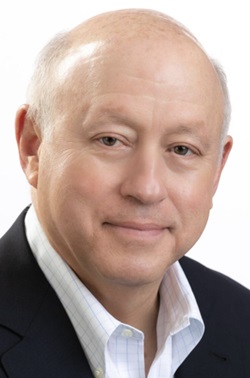
Hoffman
“We have produced an unusual number of leaders who have gone on to lead national organizations, probably more per capita than any other Jewish community in the United States,” Stephen H. Hoffman, president emeritus of the Jewish Federation of Cleveland and board chair of the Jack, Joseph and Morton Mandel Foundation, told the CJN. “That happened in the early 20th century in the area of Jewish education, and then later accelerated in the community relations field in the middle of the 20th century, and then in the Federation field.”
The reason, Hoffman said, is that Cleveland has a “secret sauce” – the willingness of its leaders to work together for a cause greater than their own personal agendas.
“Our top leaders are very successful professionals and business men and women, who learned how to work with one another, to harness the energies of one another, and who ultimately achieved ambitious agendas on the national scene,” Hoffman said.
One national leader is former Shaker Heights resident Sara Bloomfield, director of the U.S. Holocaust Memorial Museum in Washington, D.C., who said that Cleveland is a notable city when it comes to the will of the Holocaust survivors that live there.
“Many survivors have come to Cleveland because it’s such a wonderful place to build a new life and raise a family,” Bloomfield told the CJN. “After they’d been through so much unbelievable trauma, Cleveland is so embracing. It’s infused with wonderful Midwestern values and Jewish values, and it embraces newcomers with warmth and support.”
Cleveland survivors Samuel and Rina Frankel were among the museum’s founding members, survivor John Newburger worked alongside the museum as an advocate for its mission, and Leatrice Rabinsky was a pioneer of Holocaust education in Cleveland as a teacher at Cleveland Heights High School. Bloomfield said that she doesn’t believe she would be the director of the museum today if she “hadn’t grown up in Cleveland.”
“The Cleveland Jewish community is so civically engaged, not just in Cleveland, but even more broadly in the state of Ohio,” Bloomfield said. “It’s just really extraordinary, and I think it’s hard to imagine the city of Cleveland today without its Jewish community.”
Cleveland “punches way above its weight” in terms of the survivors’ commitment to Holocaust education, Bloomfield said, noting contributions from the Ratner-Miller family, Mandel family, Maltz family and several individuals who have served on the museum’s committees.
When the museum was just an idea, Bloomfield said that many people thought it was a “crazy idea,” or that it would not work. At that moment, she said, “a lot of Clevelanders were there.”
“It makes me very proud,” Bloomfield said. “I live in Washington D.C., but Cleveland’s my home.”
To Hoffman, this is not a one-off, as he said Clevelanders often have a seat at important tables, and at the Federation, work is not only being done to improve Jewish Cleveland, but also to improve the general community, both on a local, national and international level.
“You can’t have a thriving Jewish community if the general community isn’t also thriving,” Hoffman said.
Jewish Cleveland has made a significant impact locally and globally through leadership, innovation and philanthropy, Hoffman said, sharing just a few highlights from his time as the longest-serving president in the history of the Jewish Federation of Cleveland.
Working with the American Jewish Joint Distribution Committee, Cleveland helped support Ethiopian Jews making aliyah to Israel. Samuel Rosenthal helped found the American Association for Jewish Education, and ideas developed in Cleveland helped shape youth initiatives in Israel. Clevelanders also played a major role in supporting Jews in the Soviet Union. The community established a gold standard for Jewish communal security through JFC Security, LLC, transformed its day school system, and, according to the 2022 Jewish population study, continues to grow, with especially strong growth in the Orthodox community.
“I think that because we’re a relatively tight-knit community, even though we have very different views on what Jewish life can be going forward, the ability to work together to solve challenges positions us to be able to continue to innovate,” Hoffman said.
Today, Jewish Cleveland is home to about 93,200 people living in 36,100 Jewish households. Of these, many have made names for themselves outside of the Northeast Ohio area.
Five Cleveland-area rabbis have served as president of the Central Conference of American Rabbis – Rabbi Moses Gries, Rabbi Abba Hillel Silver and Rabbi Richard Block of the former The Temple-Tifereth Israel and Rabbi Barnett Brickner and Rabbi Arthur Lelyveld of the former Anshe Chesed Fairmount Temple.
Cleveland clergy have also taken on additional leadership roles, including Rabbi Binyamin Blau of Green Road Synagogue in Beachwood, who served as president of the Rabbinical Council of America, Rabbi Armond Cohen of Park Synagogue, who was the longest-serving rabbi in Cleveland and the second-longest serving rabbi of a congregation in the U.S., Rabbi Rosette Barron Haim of Celebrating Jewish Life, who was one of the longest serving congregational rabbis in Greater Cleveland, and rabbis like Rabbi Joshua Skoff of Park Synagogue and Rabbi Robert Nosanchuk at Congregation Mishkan Or, who have ushered their congregations through significant transformations.
“We have a very strong base for the future, we just have to get ourselves better organized on how to cultivate it,” Hoffman said. “We have an enormously successful cultural arts environment, so we have the makings of being a great American city down the road. We’re a good city today, but I think we can be great.”
As the 2026 FIFA World Cup, to which several U.S. cities are playing host, reminds Americans of the “melting pot” culture that the country so often forgets it is rooted in, let the spirit of July 4 remind all men and women that not only are they created equal, but that they are “endowed by their Creator with certain unalienable Rights, that among these are Life, Liberty and the pursuit of Happiness.”
