
06/11/2026
Orthodox Growth Reshaping Jewish Cleveland

Photo by DJ Johnson on Unsplash
Article reprinted with permission from Cleveland Jewish News
by Casey Couch

Blau
When Rabbi Binyamin Blau looked out the window of his office at Green Road Synagogue in Beachwood several years ago, he recognized nearly everyone who passed by. Today, he often sees unfamiliar faces – a reflection, he says, of the Orthodox community’s rapid growth.
Over the years, Orthodox community leaders across Greater Cleveland have watched classrooms fill, young families move into neighborhoods and synagogue memberships and affiliations increase.
The Jewish Federation of Cleveland’s 2022 Jewish Community Study confirmed those observations with data, showing significant growth in the Orthodox population over the past decade. As the community expands, leaders say the trend is reshaping Jewish Cleveland and creating both new opportunities and challenges for the future.
Growth
The Orthodox share of Cleveland’s Jewish population has grown significantly over the past decade, according to the 2022 population study. Fourteen percent of Jewish adults now identify as Orthodox, up from 10% in 2011, marking a 40% increase. The study was publicly released in August 2025.

Cohen
Jeffrey Wild, board chair of the Jewish Federation of Cleveland in Beachwood and a member of the Orthodox community, said while the findings are notable, they were not a surprise.
“Community leaders have been seeing signs of growth anecdotally for years,” Wild told the Cleveland Jewish News. “The 2022 Jewish Community Study helped quantify what many people were already experiencing on the ground: more young families, growing school enrollment.”
Blau agreed, and said, “I wouldn’t have predicted it 10 years ago, but after seeing so much growth, it wasn’t surprising when the study came out to see the concrete numbers.”
According to Blau, his synagogue had three summers where about 80 new families moved in, which he called “incredible,” adding the growth may stem from Orthodox families increasingly looking beyond traditional population centers in the Northeast.
“I do think that there’s a growing realization that there is life outside the
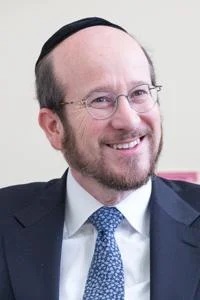
Dessler
tri-state area,” Blau said. “Much of the Orthodox population is centered in the New York, New Jersey area, and I think after COVID, when people started to realize that life could be a little bit different, there’s been a general realization over the years that one can have a very vibrant, full Jewish life, particularly Orthodox life, even if you’re not in that particular geographic location.”
Yitz Frank, executive director of Agudath Israel of Ohio, a member of the Orthodox community and a member of the study’s task force, said demographic trends common in Orthodox communities may also contribute to the growth.
“I do think it’s somewhat reflective of a national trend, where Orthodox families tend to get married a little bit younger and have more children,” he said.
According to Frank, the largest concentrations of Orthodox Jews in Greater Cleveland are located in Cleveland Heights, University Heights and Beachwood, particularly around the Green Road corridor.
The study also found that 88% of Orthodox Jewish adults are classified as “immersed” in Jewish life, the highest level of engagement measured by the study. Frank said this finding reflects the role that religious practice plays in Orthodox life.
“Orthodox Jews, just as a matter of day-to-day living and religious practice, tend to go to synagogue three times a day, certainly every Sabbath,” Frank said. “That was one of the criteria when looking at how involved they are in organized Jewish life, and Orthodox Jews, just because of that daily and consistent religious practice, are going to be much more immersed as the study defines it.”
Schools and Children

Frank. Photo Credit: Roberta Albert
According to the study, 47% of all Jewish children in Cleveland live in Orthodox households, underscoring the importance of educational institutions within the community. Wild said Cleveland’s Jewish day schools continue to be a major draw for families considering a move to the area.
“Cleveland’s Jewish day schools are known not only for religious education, but also for academic quality, student support and community environment,” Wild said. “For many families, the schools are not the only reason they move to Cleveland, but they are often a deciding factor.”
Rabbi Simcha Dessler, menahel/educational director at Hebrew Academy of Cleveland in Cleveland Heights, told the CJN the strength of Cleveland’s day schools reflects years of work by educators and community leaders to maintain high standards, inculcate value and provide an important sense of belonging to attract their students.
“These are core pillars of a vibrant school community, clearly appreciated by its constituents,” Dessler said. “A strong educational infrastructure is essential to young families who seek a community to raise a family, and this is an element that they find in Cleveland’s nurturing Jewish community. Not every community enjoys such vibrancy and so our community is both fortunate and blessed.”
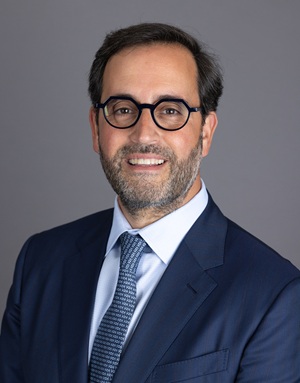
Wild
While many Jewish communities across the country are in decline, Dessler said Cleveland has “distinguished itself as one of the faster growing Jewish communities,” and that growth has been reflected at Hebrew Academy.
“The Hebrew Academy of Cleveland has been on a growth trajectory for the past three decades with an increase of an additional 600 students in the past decade alone,” Dessler said. “We are in growth mode and continue to strategically plan for the projected growth.”
The school is in the early stages of expanding its Mendy and Ita Klein Campus, the former Oakwood Country Club property. Similarly, Fuchs Mizrachi School in Beachwood is undergoing an expansion project that will increase capacity.
Jessica Cohen, Cleveland Heights city councilwoman and a mother of five, with three children attending Hebrew Academy of Cleveland, said strong educational options are essential to sustaining Orthodox growth.
“Almost all Orthodox Jewish children will attend a day school,” Cohen told the CJN. “So, in order to populate a strong, Orthodox community, there needs to be viable options for education.”
Having multiple educational options, Cohen said, allows families to find the best fit for their children.
“As the community grows, the school choices grow, and being able to have that choice about what’s best for your child and look at schools that have a strong Jewish studies curriculum but also have a strong English studies curriculum is really key,” Cohen said.
Attraction to Cleveland
In addition to educational opportunities, Wild said affordability, quality of life, strong communal institutions and a sense of belonging are among the factors that make Cleveland attractive.
Blau added many of these factors, specifically, have brought young people back to the area.
“We have an amazing number of young people who’ve moved in, many of whom grew up in Cleveland, or at least one of two spouses grew up in Cleveland, so that’s rewarding,” Blau said. “That wasn’t always the case in the past, but people came back.”
According to the study, 18% of Jewish adults in Greater Cleveland are new to the community within the past decade. Wild said that growth presents an opportunity for community organizations.
“We need to make sure that these newcomers feel welcomed,” he said.
Initiatives such as the Jewish Day School Transformation initiative, which is underway, help cater to that expanding community.
The Jewish Federation of Cleveland’s Jewish Day School Transformation initiative provides the community with an opportunity to participate in a generational transformation project, according to Jewish Cleveland leadership.
The multi-million-dollar initiative is funded in part by the Mandel Foundation and led by the Federation. It aims to provide capital and endowment support to five Jewish day schools in the Cleveland area, benefiting the entire Cleveland Jewish community.
According to Dessler, many families who initially move to Cleveland for temporary educational or professional opportunities ultimately choose to stay.
“Many young families have been nurtured in our community but many have relocated here, by choice, for the academy experience or for all the wonderful things that our community offers and provides,” Dessler said. “So many families who relocated here for temporary opportunities – a medical fellowship, residency, internship or a kollel scholars program, as some examples – have chosen to remain here.”
Cohen is among those families. Originally from Long Island, N.Y., she moved to the area more than a decade ago when her husband came to study.
“My husband came here to learn at Telshe Yeshiva in Wickliffe, and I was a trailing spouse,” Cohen said. “What kept us here, and had us seriously consider and eventually buy a house here, was the housing prices back in 2008. Cleveland is just a really family-friendly area, easy to live in, and you could buy a house as a young couple. That was something we knew we would not get on the East Coast.”
The community’s growth has also supported businesses that cater to Orthodox lifestyles, including kosher grocery stores, such as The Grove Kosher Market in South Euclid, Unger’s Kosher Market and Bakery in Cleveland Heights, Tibor’s Kosher Meat Market and Boris’s Kosher Meats, both in University Heights. Several kosher dining options exist – with two of the newer ones established by Mendel Segal, who opened Mendel’s KC BBQ in Shaker Heights, and Fiamma by Mendel in Woodmere – in the area and many local grocery stores offer kosher sections.
Long-term Challenges
According to Frank, exponential growth can place increased demands on schools, synagogues and community organizations, presenting unique challenges going forward on how to accommodate the needs of a larger population.
“It’s important for many of the Orthodox institutions to keep in mind as well as they plan for growth and making sure that they have the capacity to continue to service the population that they work with,” Frank said.
For Frank, that includes continuing to advocate for programs such as EdChoice and school vouchers, which help families afford private Jewish education. Availability of school scholarships in Ohio is one of Cleveland’s many attractive factors for the community – especially those who need to provide for larger families with young children.
According to the study, there is a relationship between financial circumstances and Jewish engagement. Among Jewish adults who reported struggling financially, nearly 60% fell into the study’s immersed or involved categories of Jewish engagement. Frank said many Orthodox families face financial pressures, including those who are immersed in Jewish life, despite being employed.
“The vast majority of people are employed and work very hard,” Frank said. “I wouldn’t necessarily say that there’s a large percentage of poverty. But I would say that, like many middle class families, they work very hard and there’s just not a lot of money left over at the end of the month. There’s not much of a financial safety net.”
Cohen said concerns she hears most often involve municipal services, such as larger families often requiring accommodations for additional city-issued garbage containers, and housing.
“The Orthodox community, at least in Cleveland Heights, is very geographically dense, and they would love to see more single-family housing in Cleveland Heights,” Cohen said. “I think that’s going to be a long-term challenge.”
To Blau, even as institutions such as synagogues, schools, Bikur Cholim of Cleveland and other communal organizations help strengthen community bonds, the largest struggle going forward will be attempting to maintain the community’s close, personal connections as they continue to grow.
“We’re in a beautiful sweet spot at the moment,” Blau said. “We’re large enough that we can provide all the services of a much larger city, and yet there’s still a sense of community, and that’s a wonderful balance.”
Maintaining that balance will become increasingly important as the community expands, he said, and as more synagogues are formed.
“Choice is wonderful,” Blau said. “People should be able to connect and pray where they feel most welcome. But how will that work as we continue to grow? There has always been a sense of unity.”
As he hopes the community can maintain their sense of closeness, he said there is still a “charm” to Cleveland’s Orthodox population that has not wavered. Preserving that, he said, will have to be intentional.
“We’re trying to make sure that the allure and charm of the community remains the same, even as we get larger,” Blau said. “And I hope we’re up for the challenge.”
To view the 2022 Cleveland Jewish Population Study, and to read other articles in this series, visit cjn.org.
